Introduction: Choosing the Right Connector Matters
In industrial applications, selecting the right connector is critical for ensuring stable signal transmission, system reliability, and long-term operational safety. Among the most commonly used connector types, D-Sub connectors and circular connectors are often compared due to their wide adoption in industrial equipment.
While both connector types serve important roles, they are designed for different application priorities. Understanding their structural differences, performance characteristics, and typical use cases can help engineers and procurement teams make better decisions.
What Is a D-Sub Connector?
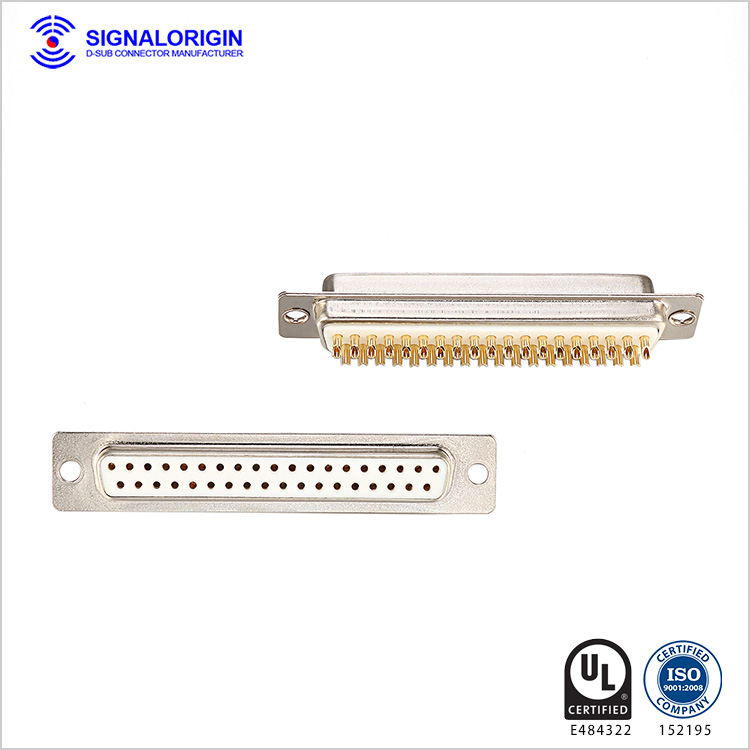
A D-Sub connector, short for D-subminiature connector, is characterized by its D-shaped metal shell, which provides mechanical strength and ensures proper mating orientation. D-Sub connectors are widely used for signal transmission in industrial automation, control systems, communication equipment, and test instruments.
They support multiple pin configurations and can transmit power, low-to-medium frequency signals, and even high-frequency signals when coaxial or shielded designs are used. D-Sub connectors are also highly suitable for custom cable assemblies and OEM solutions.
What Is a Circular Connector?
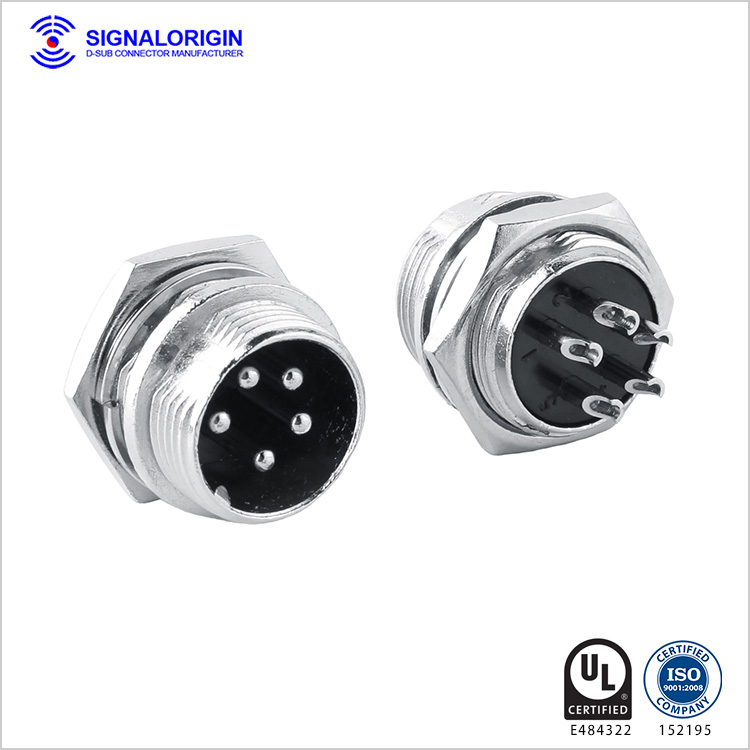
Circular connectors feature a round interface and are typically designed for harsh environments. They often provide strong sealing performance against dust, moisture, vibration, and mechanical shock, making them suitable for outdoor or heavy-duty industrial applications.
These connectors are commonly used in industries such as robotics, transportation, military equipment, and heavy machinery, where environmental resistance and mechanical durability are primary concerns.
Performance Comparison in Industrial Environments
When comparing D-Sub and circular connectors, performance requirements should be evaluated based on the actual industrial application.
D-Sub connectors offer high signal density in a compact form factor, making them ideal for control cabinets, communication panels, and electronic enclosures with limited space. Circular connectors, on the other hand, are optimized for physical robustness and environmental sealing rather than signal density.
In indoor industrial environments with controlled conditions, D-Sub connectors often provide a more cost-effective and flexible solution.
Installation and Maintenance Considerations
D-Sub connectors are typically mounted using screws, which provides stable panel fixation and makes installation and maintenance straightforward. Their standardized design also allows for easy replacement and compatibility across different equipment manufacturers.
Circular connectors often use threaded or bayonet locking mechanisms, which can provide stronger retention but may increase installation time and maintenance complexity.
For applications requiring frequent maintenance or equipment upgrades, D-Sub connectors offer practical advantages.
Cost and Customization Flexibility
From a cost perspective, D-Sub connectors are generally more economical, especially for large-scale industrial projects. Their widespread use and mature supply chain make them highly accessible and customizable.
Circular connectors usually involve higher manufacturing costs due to complex structures and sealing requirements. Customization options may also be more limited or costly.
For OEM and custom cable assembly projects, D-Sub connectors often provide better flexibility in terms of design, lead time, and overall cost control.
Which Connector Is Better for Industrial Applications?
There is no single connector that fits all industrial applications. The choice between D-Sub and circular connectors depends on environmental conditions, signal requirements, installation space, and budget.
D-Sub connectors are often the preferred choice for indoor industrial equipment, control systems, and communication applications where signal integrity, compact design, and customization flexibility are key priorities. Circular connectors are better suited for harsh environments requiring superior sealing and mechanical protection.
Understanding these differences allows engineers and procurement teams to select the most appropriate connector for their specific industrial needs.
Conclusion
Both D-Sub and circular connectors play essential roles in industrial applications. By carefully evaluating application requirements and performance priorities, businesses can achieve reliable signal transmission, cost efficiency, and long-term operational stability.
For many industrial projects, D-Sub connectors remain a proven and versatile solution.