
Focus: Opportunities in Industrial Connector Segments
Applicable Scenarios: Official website downloads, exhibition handouts, LinkedIn & SEO marketing materials, business negotiation documents
Data Sources: Bishop & Associates, China Electronic Components Association (CECA), QYResearch, public industrial research reports
Target Audience: Industrial control procurement specialists, R&D engineers, automation equipment manufacturers, foreign trade practitioners, full connector industrial chain participants
Foreword
Connectors act as the core transmission “bridge” of all electronic systems, realizing stable interconnection of electric current, optical signals and data for various electrical and electronic equipment. They are indispensable basic components for smart manufacturing and industrial equipment supply chains.
Driven by the global rollout of Industry 4.0, manufacturing transformation and upgrading, as well as the rapid expansion of new energy industries, the global connector industry has bid farewell to the era of overall universal growth and entered a stage of structural differentiated growth.
The incremental demand for consumer electronic connectors keeps slowing down. In contrast, rising demand from industrial automation, energy storage, intelligent equipment and other downstream sectors continuously expands the industrial connector market. Supported by authoritative industrial data, this whitepaper sorts out the industrial landscape, market scale, downstream demand and technical trends in a concise manner. Centered on the high-value industrial connector track, it analyzes domestic substitution opportunities, existing industry pain points and breakthrough paths for local original manufacturers. It provides core references for product selection and procurement, enterprise strategic decision-making and overseas market development.
I. Industry Development Overview & Evolution Logic
After decades of development and iteration, the global connector industry has completed a full industrial transfer cycle: initial monopoly by European and American brands, rise of Japanese manufacturers, capacity transfer to China, and the current stage of advanced domestic substitution.
In the early stage, international giants including TE Connectivity, Molex and Amphenol dominated the market, holding core patents and high-end core technologies. After 2000, global electronic manufacturing capacity shifted to China, gradually forming a complete domestic connector industrial chain, which was initially engaged in OEM production and low-end imitation.
Since 2015, the booming new energy, industrial automation and AI industries, coupled with national policies for supply chain independence and controllability, have accelerated technological breakthroughs of local connector enterprises. Domestic manufacturers have gradually upgraded from mid-to-low-end general products to high-precision mid-to-high-end industrial connectors.
The core driving force of the industry always comes from the intelligent and modular upgrading of downstream equipment, as well as the rigid demand for high-reliability connectors under industrial working conditions. Refined competition in high-quality segmented tracks has become the mainstream of the market.
II. Global Market Scale & Industrial Landscape
According to 2026 authoritative data released by Bishop & Associates:
- The global connector market size exceeded USD 105 billion in 2025;
- It is expected to reach USD 112 billion in 2026;
- The compound annual growth rate (CAGR) will remain at 6.5%–7.2% from 2026 to 2030.
In terms of regional distribution, the Asia-Pacific region accounts for 56% of the global market share. China is the world’s largest and fastest-growing single market for connectors. The domestic connector market scale hit RMB 328.4 billion in 2025, with a year-on-year growth of 17.3%.
From the perspective of industrial chain structure:
- Upstream high-end core materials have long been monopolized by Japanese and American enterprises, which is the main bottleneck restricting the upgrading of domestic manufacturers;
- The midstream manufacturing sector presents obvious tiered competition, divided into four tiers: international leading brands, listed domestic enterprises, segmented original manufacturers and low-end processing factories;
- Downstream applications cover industrial, automotive, communication, medical and other fields, with huge gaps in access thresholds and product demand standards of each track.
The core competition logic of the industry has undergone fundamental changes. Simple capacity expansion and price competition are no longer core advantages. Product reliability, customization capacity, stable delivery and complete testing systems have become key competitive barriers.
Industrial equipment has a service life of 5–10 years. Downstream customers attach great importance to long-term stable quality, and low-cost inferior products are gradually eliminated by the market.
Industrial equipment has a service life of 5–10 years. Downstream customers attach great importance to long-term stable quality, and low-cost inferior products are gradually eliminated by the market.
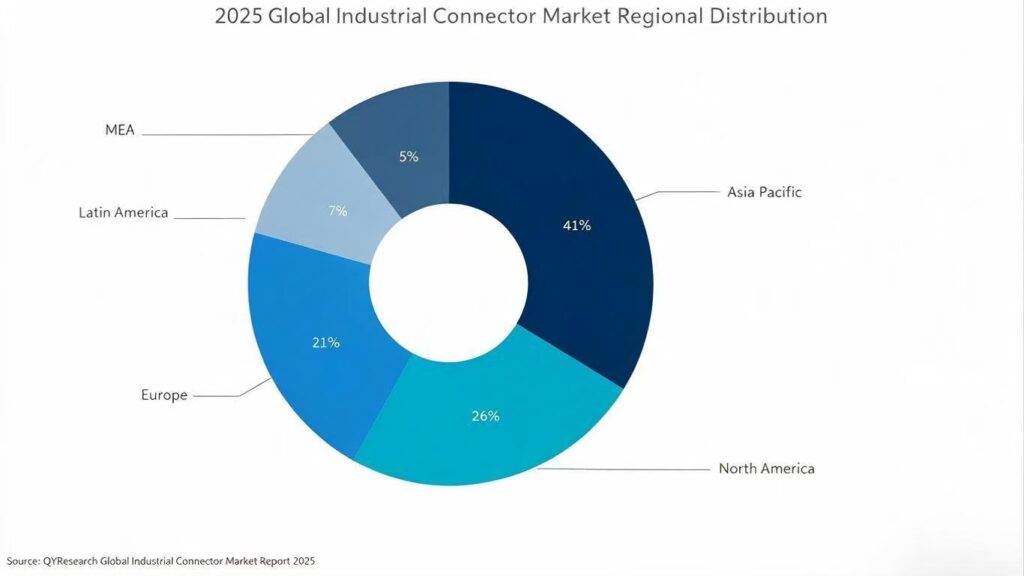
Figure 1
III. Downstream Track Comparison: Industrial Connectors as the Optimal Deep Cultivation Track
Three core tracks dominate downstream applications of global connectors: communications, automotive and industrial. Each track varies greatly in market dividends and access barriers. From comprehensive adaptability, industrial connectors are the best target track for small and medium-sized local original manufacturers.
- Automotive & high-end communication tracks: Extremely high access barriers, severe monopoly of leading brands, certification cycles of 1–3 years, making it difficult for new manufacturers to enter the market.
- Consumer electronics track: Fast product iteration, fierce price competition, thin profit margins and saturated stock competition, with no long-term sustainable development value.
The industrial connector track has prominent advantages:
- Long product life cycle and stable models without frequent revision;
- Customers focus on quality and stability, with relatively mild price competition;
- Vast space for domestic substitution; a large number of industrial control equipment still relies on imported connectors, forming a sufficient substitution window.
Industrial connectors are widely used in automated production lines, servo systems, industrial robots, energy storage equipment, intelligent warehousing and other scenarios. They need to adapt to complex working conditions such as extreme temperature, vibration, dust and corrosion. High-protection, high-reliability circular connectors, D-SUB connectors and wire-to-board connectors occupy mainstream market demand.
IV. Core Technology Development Trends (2026–2030)
Combined with technical forecasts from industrial associations, industrial connector technology will develop along five core directions in the next five years to meet downstream equipment’s demands for intelligence, lightweight and high reliability:
- High-speed integrated signal transmission: Power + signal integrated connectors will be widely popularized to meet the demand for massive industrial data transmission;
- Miniaturized high-density design: Adapt to the lightweight upgrading of industrial control equipment while ensuring product reliability;
- Upgraded environmental protection performance: Wide temperature resistance, salt spray resistance and anti-vibration high-reliability products become rigid requirements;
- Modular easy assembly: Match automated production and later maintenance to reduce customers’ assembly costs;
- Lightweight & low-carbon design: Optimize structural design under the premise of qualified performance to balance quality and cost.
V. Track Opportunities, Industry Pain Points & Breakthrough Paths for Local Manufacturers
Market Opportunities
The industrial connector track keeps releasing incremental market space. Driven by continuous industrial automation renovation, booming new energy storage and growing intelligent warehousing equipment shipments, coupled with manufacturing transfer to Southeast Asia and Mexico, mid-to-low-end overseas industrial control equipment manufacturers have surged demand for cost-effective connectors, bringing dual domestic and overseas market dividends.
Main Industry Pain Points
- The high-end market is still monopolized by imported brands, while the low-end market faces homogeneous cut-throat price competition;
- Long supplier access cycle: Sample testing and supplier filing for industrial customers take 3–12 months, raising high market entry barriers.
However, international brands have delivery cycles of 24–36 weeks and continuous price hikes, creating an excellent domestic substitution window for local original manufacturers.
Unique Advantages of Local Original Manufacturers
Compared with global giants, domestic original factories have strengths in rapid customization, small-batch sample production, flexible mold modification and localized after-sales service. They can accurately respond to non-standard customized orders of small and medium-sized equipment enterprises, making up for the service defects of overseas brands.
Four Breakthrough Paths for Local Industrial Connector Manufacturers
- Focus on segmented industrial control tracks, build core product portfolios, and avoid blind full-category expansion;
- Establish complete reliability testing systems covering high & low temperature test, salt spray test and plug life test to build quality certification advantages;
- Improve rapid customized R&D capacity to undertake small-batch and non-standard orders;
- Deploy multi-channel marketing: offline domestic exhibitions, online new media & SEO, and cross-border foreign trade channels to accumulate long-term customer resources.
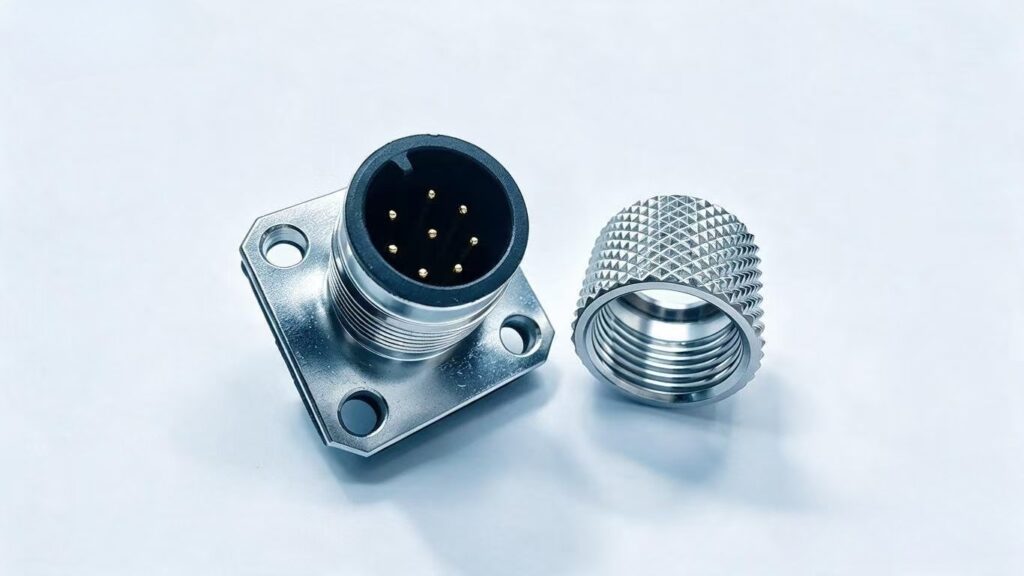
Figure 2.M12-8P male with flange Circular Connector|Photo by SignalOrigin
V. Industry Summary & Future Outlook
Structural differentiation of the connector industry will intensify from 2026 to 2030, and the era of extensive price competition has completely ended.
With stable incremental market demand, sufficient domestic substitution space and moderate competition pressure, industrial connectors become the most high-quality segmented track for local manufacturing enterprises.
Supply chain independence and controllability will become the mainstream industrial trend in the next five years. Imported brands will face growing disadvantages in delivery cycle and cost, and downstream customers’ recognition of domestic high-reliability connectors will increase significantly.
Industry reshuffling will accelerate. Small factories without independent R&D and testing capacity that rely only on low-price competition will be phased out. In contrast, original factories focusing on industrial tracks, prioritizing product reliability and possessing customized service capacity will continuously seize the import substitution market and achieve steady growth amid the reconstruction of the global industrial landscape.
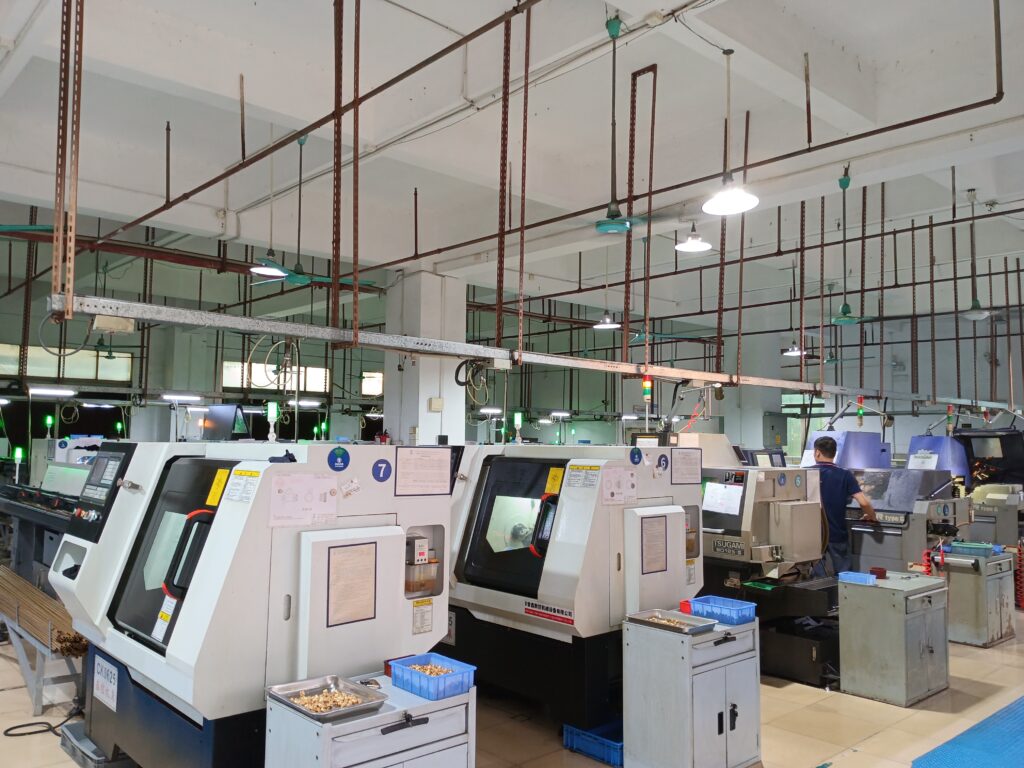
Figure 3.CNC turning workshop|Photo by SignalOrigin
If you need the complete white paper, please email h02@signalorigin.com. We will send you the full document.
Signal‑Origin is a professional manufacturer of industrial connectors, focusing on high‑reliability interconnect solutions.
© 2026 All Rights Reserved.
This condensed whitepaper is for industrial reference and communication only.
All data comes from public industry research reports for reference solely.
It does not constitute investment advice, official technical specification or sales quotation.